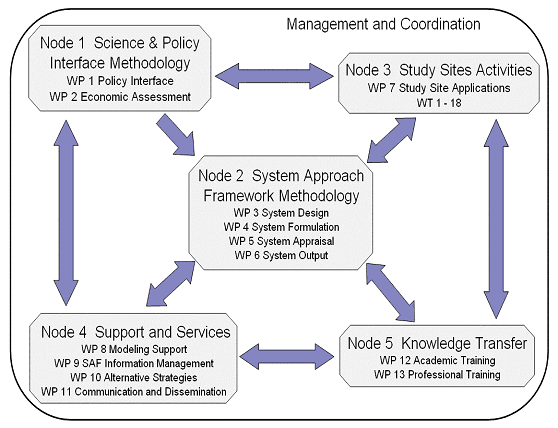
The primary activity unit is that of a Work Package. These are clustered into functional Nodes. Each of the Project’s five nodes is differentiated by functional distinctions based on differences in objectives, deliverables, and scheduling that facilitate their coordination and management. A deliberate overlap between the Nodes is sequential in function and in composition to improve to the productive efficiency and to ensure coherency in the information flow through the implementation of the 4-yr project. The purpose of the Nodes is briefly described and their interactions are illustrated in the figure below.
Node 1 produces reference material in the areas of social assessments, deliberation support tools, and methodology for economic evaluation that will serve the objectives of Systems Approach Framework (SAF) development and science-policy interfacing. Each of these activities is placed under the responsibility of a small group of partners that will then serve as a support group to teams in charge of SAF implementation in Study Site Applications (SSAs). Node 2 is in charge of SAF development. It is implemented by forming working groups to produce methodological frameworks. The work is divided into work packages and work tasks that represent a succession of steps. A small core group is responsible to prepare and deliver. The core group interacts with a larger group of researchers representing the study site teams in charge of SAF application. The SAF develops as an operational decision support system along with these interactions. Under Node 3, 18 Study Sites have been selected to develop an application of the SAF in an interactive manner with local stakeholders. For each SSA a collaborative team involving different core partners in association with affiliated partners is formed. Some involve international collaboration. Node 4 provides support and services to the whole SPICOSA community, in particular model support, internal and external information management, and an assessment of alternative strategies for Integrated Coastal Zone Management. Node 5 concerns knowledge transfer
activities, both academic and professional training.
|